Browser-Based Casinos: Charting Progress from Initial Web Technologies to Modern Player Behaviors
Written by Rosa Meier · Sep 5, 2026
Browser-Based Casinos: Charting Progress from Initial Web Technologies to Modern Player Behaviors
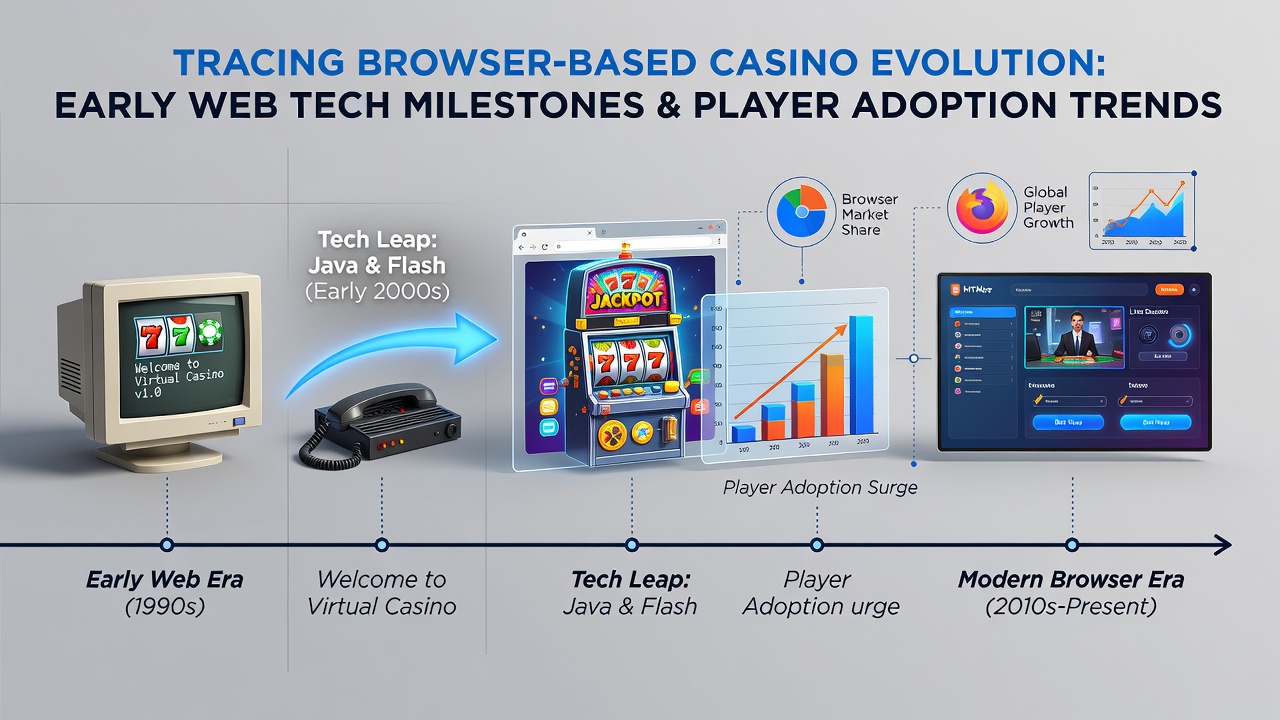
Browser-based casinos emerged in the mid-1990s when basic HTML and early JavaScript enabled simple gambling interfaces on desktop computers, and data from industry archives show that the first sites launched around 1996 with limited graphics and text-based interactions. Those early platforms relied on dial-up connections and basic server scripts, while player numbers remained small because internet access was not widespread yet. Researchers at various academic institutions documented how these sites handled transactions through rudimentary encryption methods that evolved quickly as security concerns grew.
Early Web Milestones Shape Initial Casino Platforms
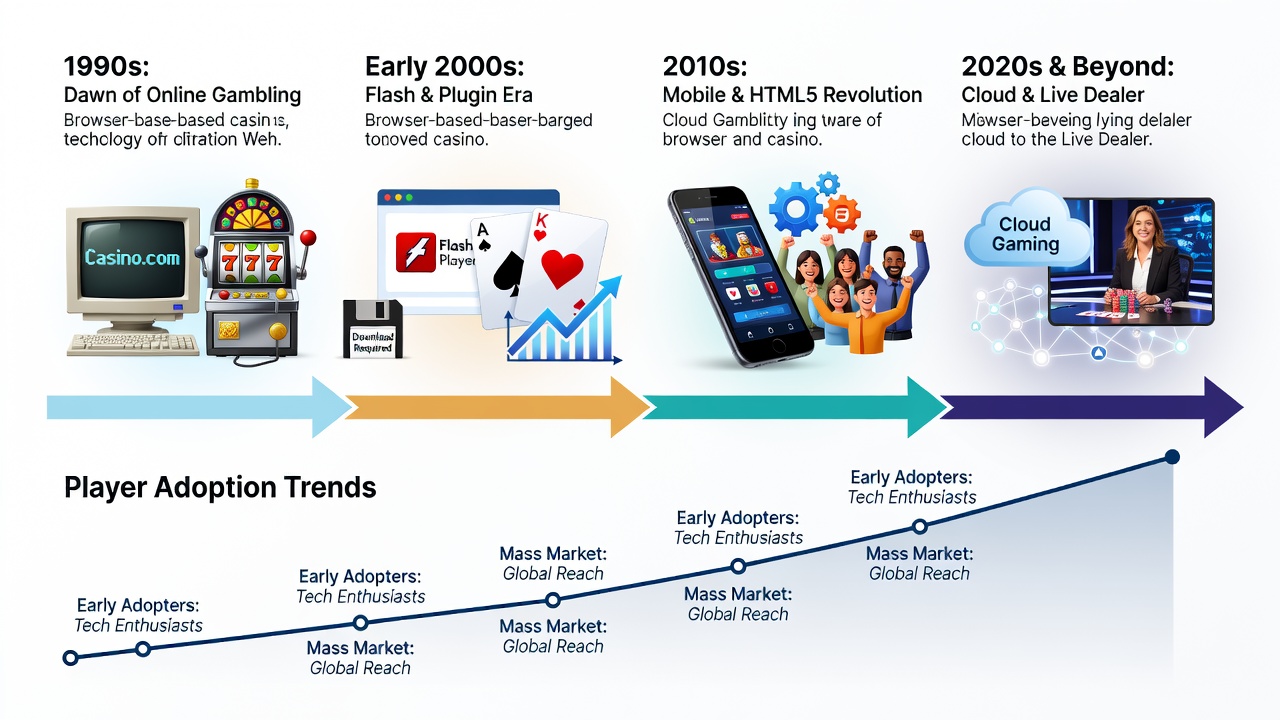
Flash technology entered the scene in the late 1990s and early 2000s, allowing developers to create animated slot machines and table games that ran directly in browsers without additional downloads, and adoption accelerated because users appreciated the visual improvements over static HTML pages. Studies from that period indicate that Flash-based casinos captured a growing share of online traffic as broadband connections replaced dial-up, with player bases expanding from thousands to millions across multiple regions. European regulators outside the UK tracked these developments closely, noting increased participation rates tied to better browser compatibility.
HTML5 arrived as a standard around 2014 and replaced Flash entirely in most casino environments because it supported mobile responsiveness and reduced security vulnerabilities, while data compiled by research firms reveal that sites transitioned rapidly once major browsers dropped Flash support. Observers note that this shift coincided with rising smartphone usage, which opened casino access to users who previously relied only on desktop machines. Government agencies in Canada and Australia reported corresponding rises in licensed operator registrations during the same timeframe.
Player Adoption Trends Across Decades
Adoption patterns show steady growth from the 2000s onward, with figures from industry reports indicating that global online gambling participation reached tens of millions by the mid-2010s as browser improvements lowered technical barriers. People often discovered these platforms through search engines and affiliate networks, and data shows that regions with higher broadband penetration experienced faster uptake compared to areas with limited infrastructure. Academic papers have examined how demographic shifts brought younger players into browser-based environments during the 2010s, driven by seamless integration with social media sharing features.
What's interesting is how mobile browsers further transformed access patterns after 2015, because responsive designs allowed games to scale across devices without separate apps, and statistics from multiple trade associations confirm that a majority of sessions moved to smartphones and tablets within a few years. Yet older desktop users continued to engage through updated web versions, creating a dual-device trend that operators accommodated through unified backend systems. One study revealed that average session lengths increased as loading times dropped with modern JavaScript frameworks.
Technology Shifts and Regional Regulatory Influences
Security protocols advanced alongside browser capabilities, moving from basic SSL to more robust standards that protected user data during real-money transactions, and reports from the Nevada Gaming Control Board highlight how these improvements supported licensed operations in the United States. Meanwhile, similar frameworks appeared in other jurisdictions where authorities required compliance with updated encryption rules to maintain player trust. Those who've studied adoption curves point out that transparent regulatory environments correlated with higher reported participation numbers in official surveys.
By September 2026, browser-based platforms had incorporated advanced features such as WebGL for 3D graphics and WebAssembly for faster performance, allowing complex live dealer experiences to run smoothly without plugins. Research indicates that these enhancements sustained player interest amid competition from dedicated apps, while figures from European trade groups show continued growth in browser sessions across multiple countries. Observers note that accessibility improvements, including better screen reader support, also broadened the user base beyond traditional demographics.
Future Trajectories Based on Current Data
Analysts project that emerging web standards will continue to influence casino interfaces through enhanced privacy controls and faster rendering engines, and data from university-led research projects suggest these changes could further align player behaviors with multi-device usage patterns. Government sources in Australia have already documented how browser updates affect compliance reporting for operators. The reality is that ongoing refinements in JavaScript libraries and CSS capabilities keep browser-based options competitive in a landscape where players expect instant access from any connected device.
Conclusion
Browser-based casino development tracks closely with broader web technology milestones, from early HTML experiments to HTML5 dominance and beyond, while player adoption reflects improvements in speed, security, and device compatibility. Reports from diverse regulatory bodies and research institutions continue to capture these parallel evolutions across regions. As standards advance, the patterns established in previous decades provide clear indicators of how participation may shift with new browser capabilities.